


Viraj Muthye: Bioinformatics, Poetry, and Biology

A few weeks ago I had the pleasure of interviewing Viraj Muthye, a post-doc researcher at Iowa State University, who is investigating the role and functioning of mitochondria in humans and animals. In this interview, Viraj shares how he was introduced to science and why he chose to dedicate his career to biology, as well as his poetry, and productivity tips. His genuine passion for the natural world and expertise in his field shine throughout the interview and I encourage everyone to go and follow his Instagram (@awesomebiology) for more!
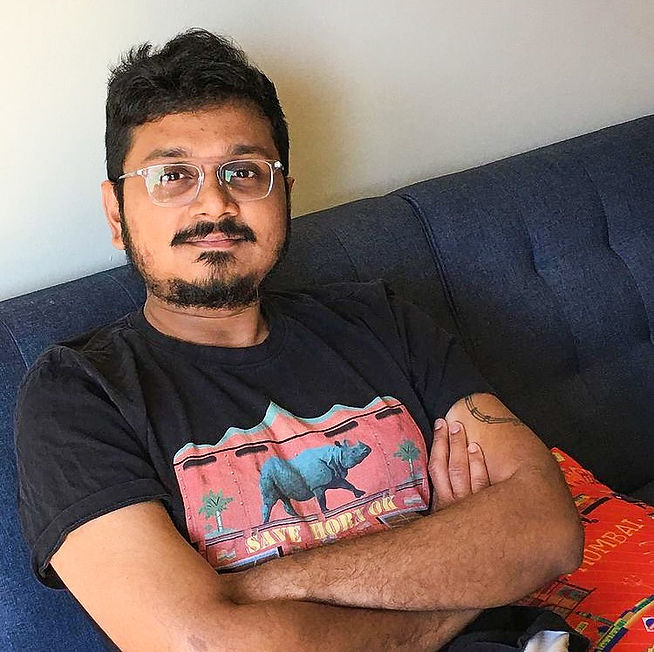
What’s your origin story? You’ve mentioned that you are originally from Mumbai. Why did you decide to move to the US, and how did biology enter your life?
I have always been interested in biology, biodiversity, and evolution. I knew I wanted to go for a PhD much later in my life. I was initially super interested in infectious diseases. At that time, I was not happy with the opportunities available in India in Biotechnology. Hence, I decided to come to the US to work with pathogens. I got the chance to work with the pathogen Legionella pneumophila that causes the Legionnaire’s disease.
I have always been interested in biology since childhood. I used to go on a lot of treks and camps when I was young. During those times I got to see so many amazing examples of biodiversity in India, like poisonous snakes, spiders, different flowers, and so on! I guess it just strengthened my interest in biology!
What was your PhD thesis about, and what was your personal PhD experience like?
So, my PhD was in Bioinformatics and Computational Biology. I analyzed the evolution of the mitochondrial genome in animals and developed a machine-learning tool to identify mitochondrial proteins in animals. [My] PhD was the most difficult thing I have done in my life. It is also the most rewarding thing I have done in my life. It taught me things no job ever could.
[But], my PhD had several low points. The thing that I remember the most is how I went through five different projects before deciding my research topic. However, that is the most important part of [a] PhD - learning how to independently ask a question and then answer it.
I [also] loved teaching a LOT. I taught in every single semester of my PhD - lectures and labs. That used to be my stress-buster time of the week!
You are currently a postdoctoral researcher in bioinformatics. What is bioinformatics and what does your research involve?
Bioinformatics is using computational approaches to answer biological questions. In my research, I am studying how the mitochondrial proteome has evolved in animals.
Here’s the weird thing - all animals have two genomes - nuclear and mitochondrial. We get our mitochondrial genomes from our mother. It encodes around 13 proteins. But over 1,000 proteins encoded by the other genome (the nuclear genome) are imported into the mitochondria where they carry out important functions which keep us alive.
Today, we still do not know how many proteins are functioning in our mitochondria! One way [to find out] is to perform experiments to find out what mitochondrial proteins are [present] in an animal.
But there are two problems: even the best experiments will miss several important mitochondrial proteins and these experiments are only focused on model animals like human and mice. So how can we find out what mitochondrial proteins are present in non-model animals? Computationally!
So, I essentially developed a machine-learning tool that learns from existing information on mitochondrial proteins in animals and predicts mitochondrial proteins in other animals computationally. To see how the animal mitochondrial proteome evolved, I also compared the mitochondrial proteome of different animals.

Why is your research important?
Mitochondria keep us alive, and we do not know everything that is inside them! I’m trying to add more information to this question. The better we understand our mitochondria, the easier it will be to understand its involvement in diseases.
What inspires you to continue as a researcher in this field?
It is always curiosity that inspires me to continue as a researcher. I want to be able to answer questions, explore the unknown, and understand things around us! It is amazing how little we know about ourselves and other organisms. I want to contribute my bit towards understanding and appreciating everything around us.
Tell us about your blog writing. You’ve mentioned that you’re a poet! Where did the title ‘Lithium Lives’ come from and where do you get inspiration for your short stories and poetry?
I have been writing from a young age. I initially started writing to express my negative thoughts and feelings. When I started, I used a pseudonym when I wrote my poems. In India, guys were ridiculed for writing poems.
The [blog] name is an ode to Iron Maiden and Nirvana since I was really into rock when I was growing up. My inspiration for short stories comes from authors like Roald Dahl (the darker stories), Douglas Adams, and PG Wodehouse. I even have it tattooed on my back so that I always remember my inspiration.
Atlas
men turn tough, and spend no fear
when life becomes a scare
nothing is too much for a burdened man
if the burdens are his to bear
knees might break, and teeth might chip
and the man might bleed away
but the burdened man no longer pains
on a lonesome summer day
the burdened man sits down and prays
to a God, and hopes he hears
for the fear of shedding his loneliness
he lets no friend come near
he loves his pain, embraces hate
it keeps his burden light
stays on his toes, for no man content
can keep his goals in sight
such heavy are the burdens of his
it weighs a hero down
he leaves his heart in a secret place
and carries his world around
What are your productivity tips and hacks for young researchers? Any advice for a younger self?
I wish I had learned this at a younger age, but essentially the best way to be productive is to take care of your body. Drink water, sleep well and be active. It works wonders when I’m working. When I feel good, I do better work.
You’re very passionate about science education. Why is that? If there was only one takeaway that you hoped your students remember from your teaching, what would it be?
Be curious! I always tell this to my students. We still know so little about everything around us. There will always be questions to answer.
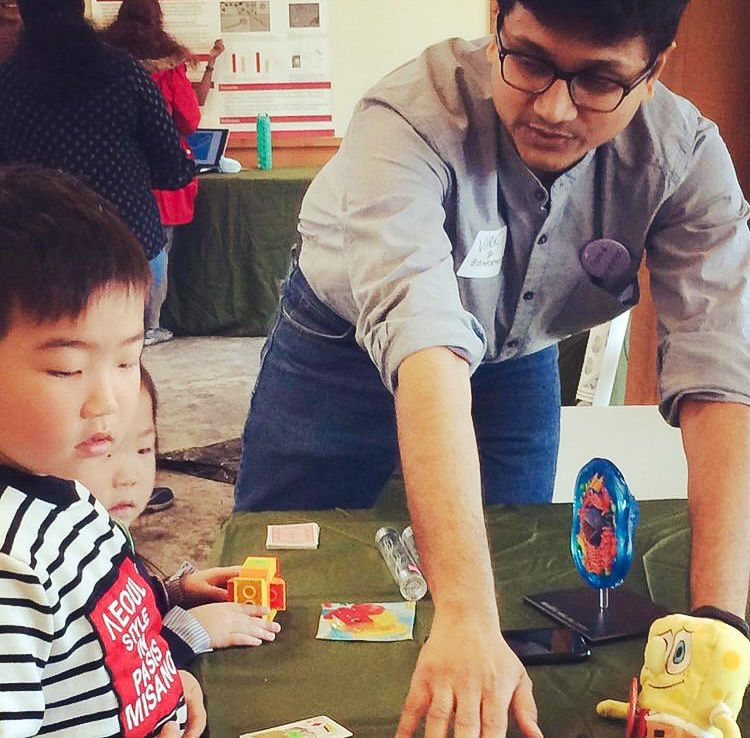
What’s on the horizon for Dr. Viraj Muthye and @awesomebiology?
I definitely want to continue in academia. I want to continue my research on mitochondria. I also want to teach, because I cannot imagine my life without teaching.

To follow Viraj’s research journey and receive awesome biology facts, check out his Instagram (@awesomebiology), his poetry blog, and his Twitter!
Know someone you'd like me to interview? Comment below or DM me on Instagram for requests!

It's an amazing interview! Thanks for sharing with us! Discovered your Instagram and Blog only now, but I already like it much!