


Velvet Worms and Deadly Slime! (WW #2)

Updated: Nov 16, 2020
This week I’m featuring a critter requested by a commenter on last weeks post; the velvet worm! With bizarre body shapes and abilities they are an easy choice for the Wacky Wednesday list.
Quick facts:
Scientific phylum name: Onychophora (Ancient Greek: onyches = claws, pherein = to carry)
Geographic location: tropical habitats and temperate areas of South America, Africa, and Asia
Distinguishing feature: looks like a worm with legs!
Conservation status: Endangered
Over 500 million years old, the velvet worm is a remarkable example of an animal which has evolved to become successful in its environment. Often described as a worm with legs, these little guys are named due to their fuzzy skin texture looking soft like velvet. The bumps on their skin, called papillae, can help the animal sense the surrounding environment. Whilst the antennae are the most prominent sensory organ they also have an eye which can sense light (they don’t like light - they’re mostly nocturnal!). Their skin can easily lose water and therefore they stay in moist environments, like rainy forests with lots of moss, to prevent drying out.
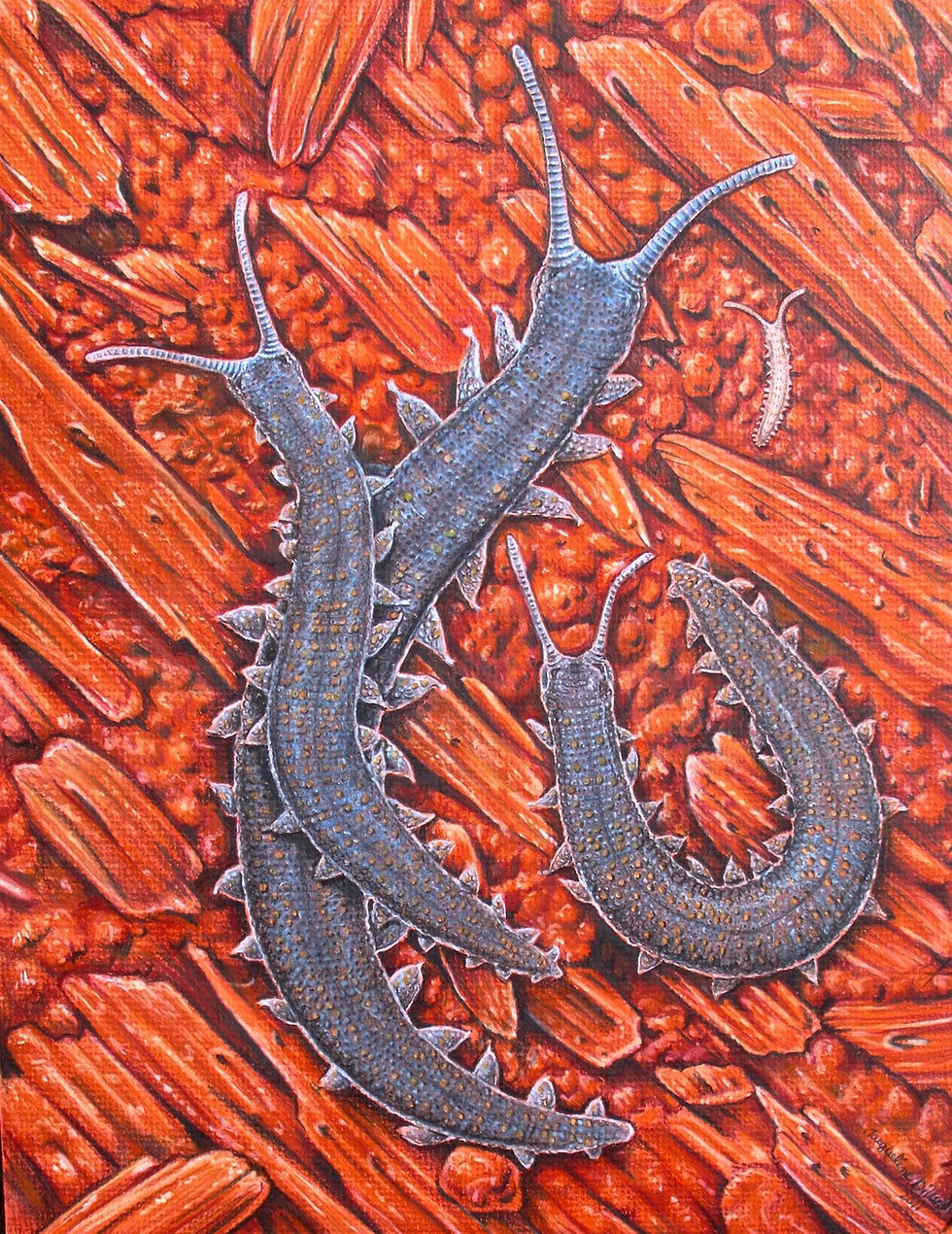
Illustration of blue velvet worms by Jacqueline Dillard
Velvet worms have between 13 and 43 sets of legs, known as lobopods or 'stub feet'! As a soft-bodied creature they don’t have any skeleton but instead, use the muscles in each of their limbs to bend each foot and retract their claws. Without a skeleton, velvet worms are like plastic gloves filled with water. To make their body rigid they need to hold lots of water to maintain hydrostatic pressure.
Despite being slow movers, velvet worms have evolved a remarkable way of hunting their prey; termites, crickets, cockroaches, spiders, and snails. As slow-movers, they need a way to attack predators from a distance. To do this, they shoot slime from tubes near their mouth, called oral papillae. Once the slime is released and hits prey, it immediately starts to dry and become sticky, trapping the insect. The slime is 90% water, but also contains proteins and sugar to increase stickiness. When possible they will eat their own leftover slime to replenish their supply. If they don’t, it can take approximately 24 days to rebuild their stores.
Whilst collecting data on population sizes is difficult due to their nocturnal tendencies some velvet worm species are considered endangered. Australia is home to over 70 species of velvet worms with 20 of them in Tasmania. To protect them the Tasmanian government is currently conserving a region of state forest in which Giant velvet worms and Blind velvet worms live.
See this velvet worm catch a beetle!
To have your favourite wacky animal featured on the blog, comment their species name and why you like them below!


Comments