


Titans of the flower garden

Updated: Dec 11, 2020
I, Titan Arum
Indonesia, my only home
I tower over landscapes
3 metres tall
Some may wrinkle their nose
But I stay still as the cameras pose.
This week we broaden the Wacky Wednesday criteria to include a more sedentary, but nevertheless fascinating species.
Confession: for the first half of my degree I was convinced that I was going to be a botanist.
I always felt an odd affinity for plants and found their interactions with the animal world both incredibly beautiful, and important. It’s easy to forget, but the interactions between plants and animals are what drive the entire biological ecosystem that we live in.
In honour of this, today’s Wacky Wednesday features one of the largest flowering plants in the world, the Titan Arum. Let’s dive in.
Quick Facts:
Scientific name: Amorphophallus titanum (Ancient Greek: ‘titan’ = giant)
Geographic location: Sumatra, Indonesia
Distinguishing feature: Size! You can’t miss it. You can also smell it from a mile away.
Conservation status: Endangered
The main event of the plant's life cycle, the bloom, takes approximately 12 years to first appear. It’s the event of the decade, with people flocking from around the world to witness a biological spectacle. It’s sheer size, being over 3 metres in some cases, make it hard to miss. Whilst looking at photos of them is fascinating, there’s one thing that photos simply cannot convey.

Earning their name as a corpse flower, this plant releases chemicals into the air which make them smell wonderfully horrendous. Research into the chemistry of these flowers shows they release the same chemicals which give sweaty socks, rotting fish, mothballs, and faeces their odour.
Once in bloom the tall, centre column of the flower, known as the spadix, warms up in a process called thermogenesis. Reaching up to 36°C, this warmth helps to quickly spread the flower’s scent and attract flesh-eating insects and flies for pollination. Once attracted, these insects often lay eggs inside chambers at the base of the spadix, where the male flowers are located. This is a perfect example of how flowers and insects benefit from each other. This is called a mutualistic relationship.
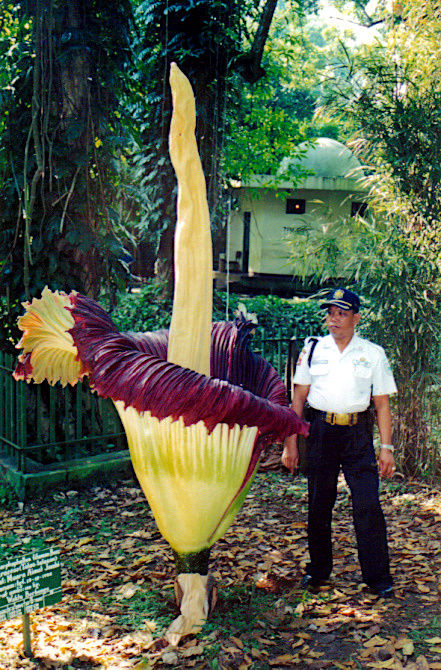
Unfortunately, the bloom only lasts 48 hours so it’s important to be highly-attractive within this window. It won’t grow another bloom for at least another 2-3 years. Once the flower starts to decay, a single branched leaf the size of a tree starts sprouting from the earth. Growing up to 6 metres tall, the leaf only lasts a year before it is replaced by a new one. These gigantic leaves act as solar panels which will power the next bloom.
Unfortunately, these plants are now listed as endangered on the IUCN Red List. Logging, agriculture and collecting them as exhibition specimens are the most threatening human practices. Thankfully, places like the Adelaide Botanic Gardens are leading the charge for conservation by cultivating new Titan Arums from seed. Doing this has given us a greater understanding of how to successfully care for this titan of the plant world.
What do you want to see featured next week on Wacky Wednesday? Comment below!


The hairy frog??
WOW!! What about zombie starfish??
Wow!! This is so amazing and interesting!! This plant is really a big one! Maybe the biggest on the planet?? Thanks for show me this!!